
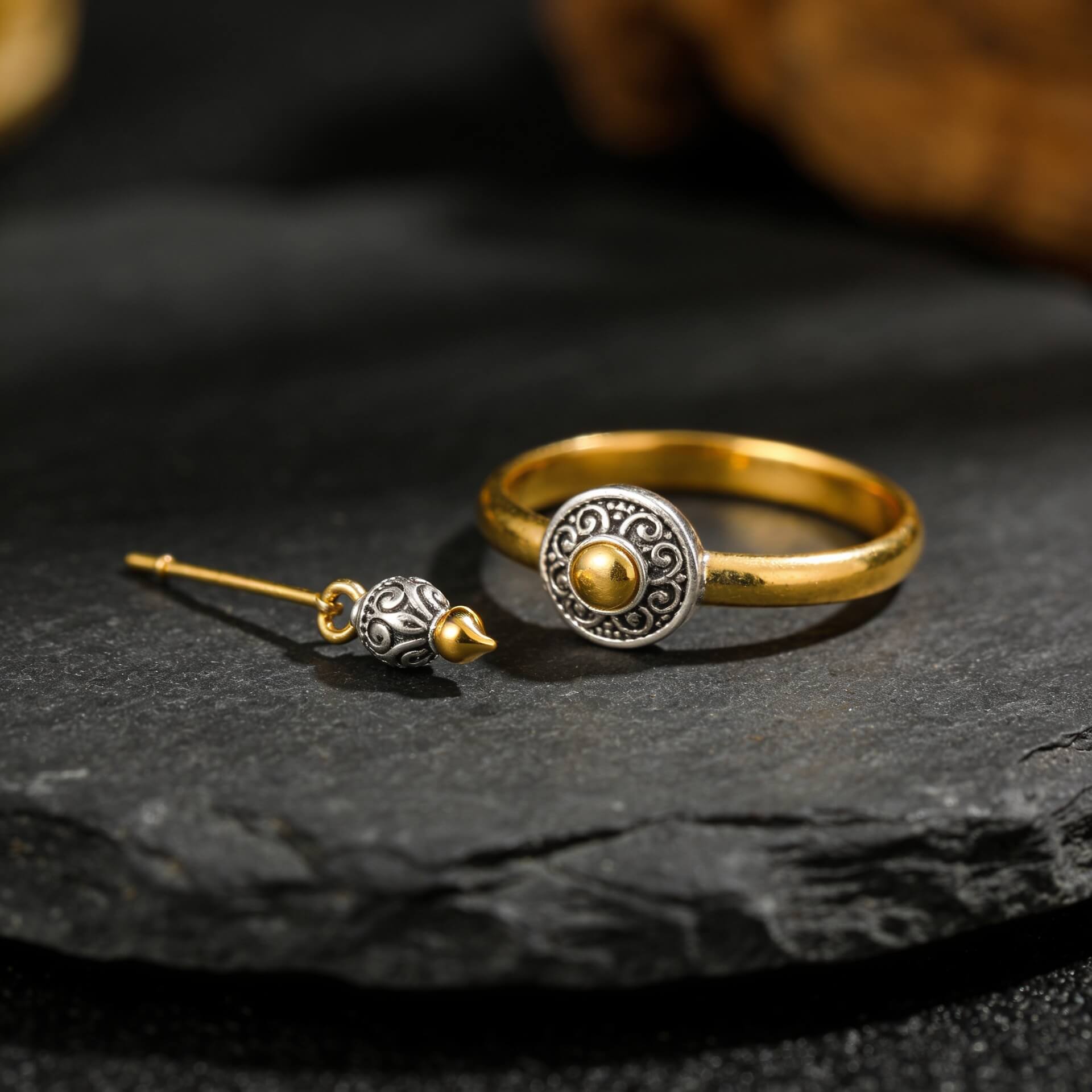
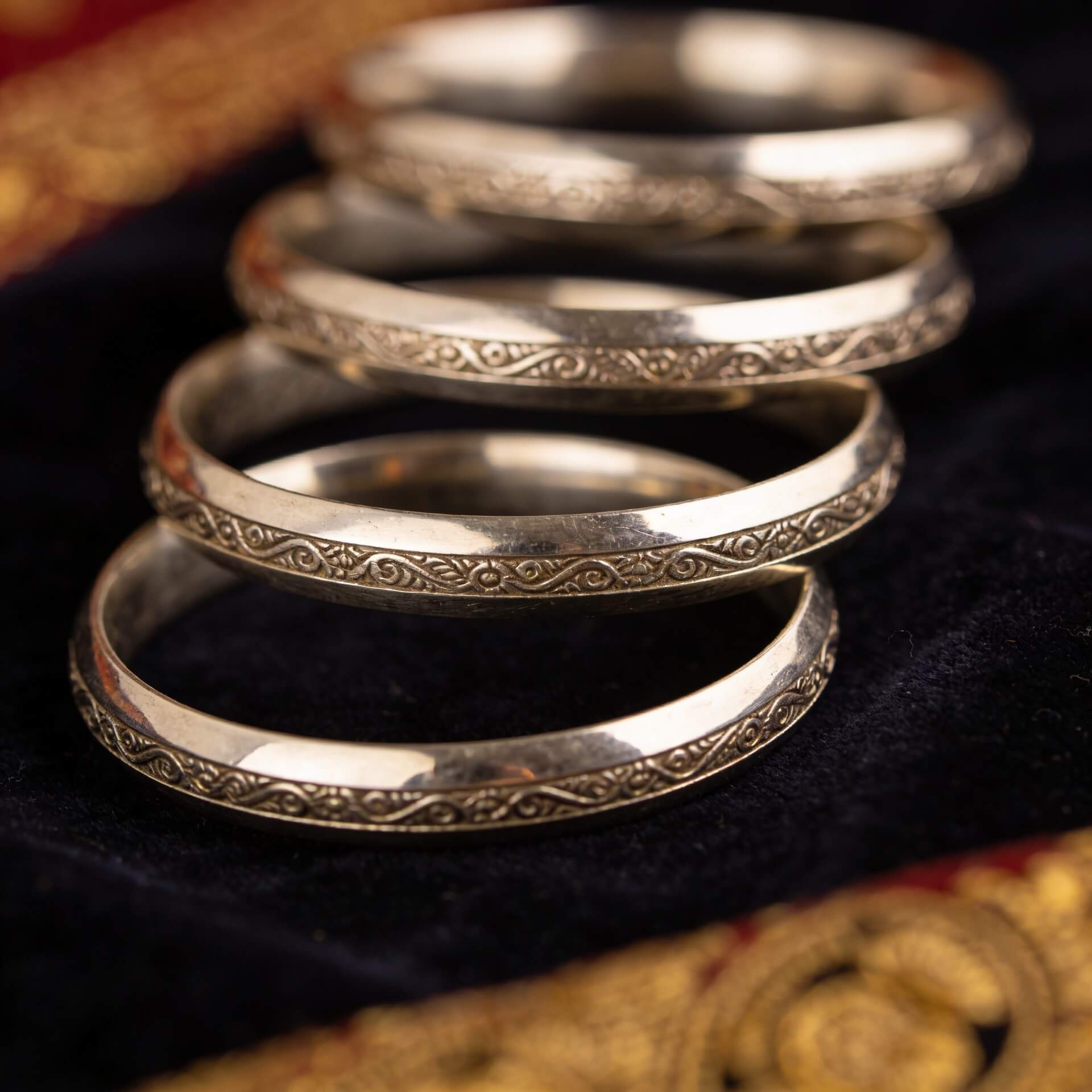
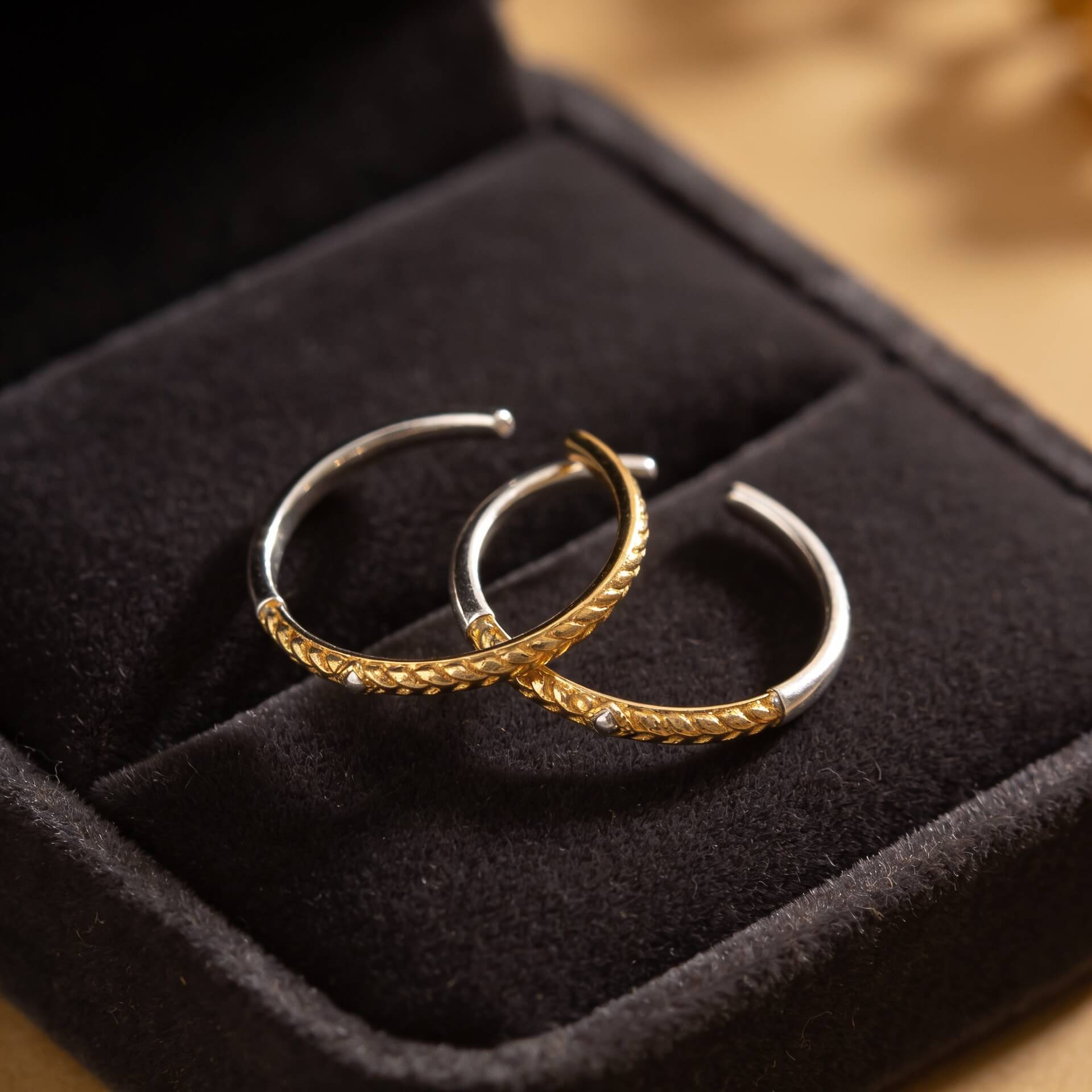

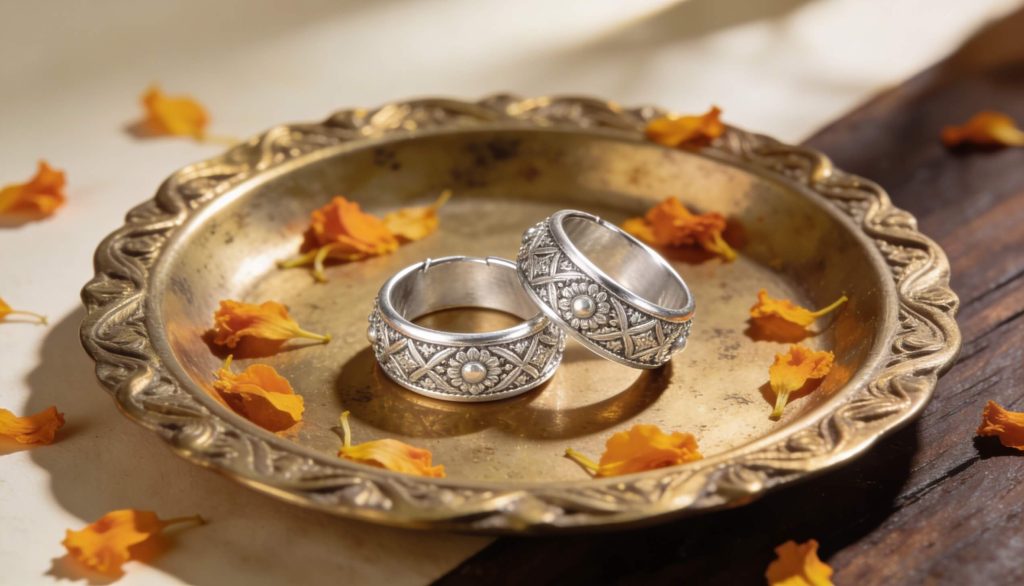
Walk through any South Indian household and you will find a pair of silver toe rings among the most carefully kept pieces of jewellery a woman owns. Not the most expensive. Not the most visible. But often the most meaningful.
Toe rings — Bichiya in Hindi, Mettelu in Telugu — are one of the oldest and most layered traditions in Indian jewellery. Here is their full story.
Why do Indian women wear toe rings?
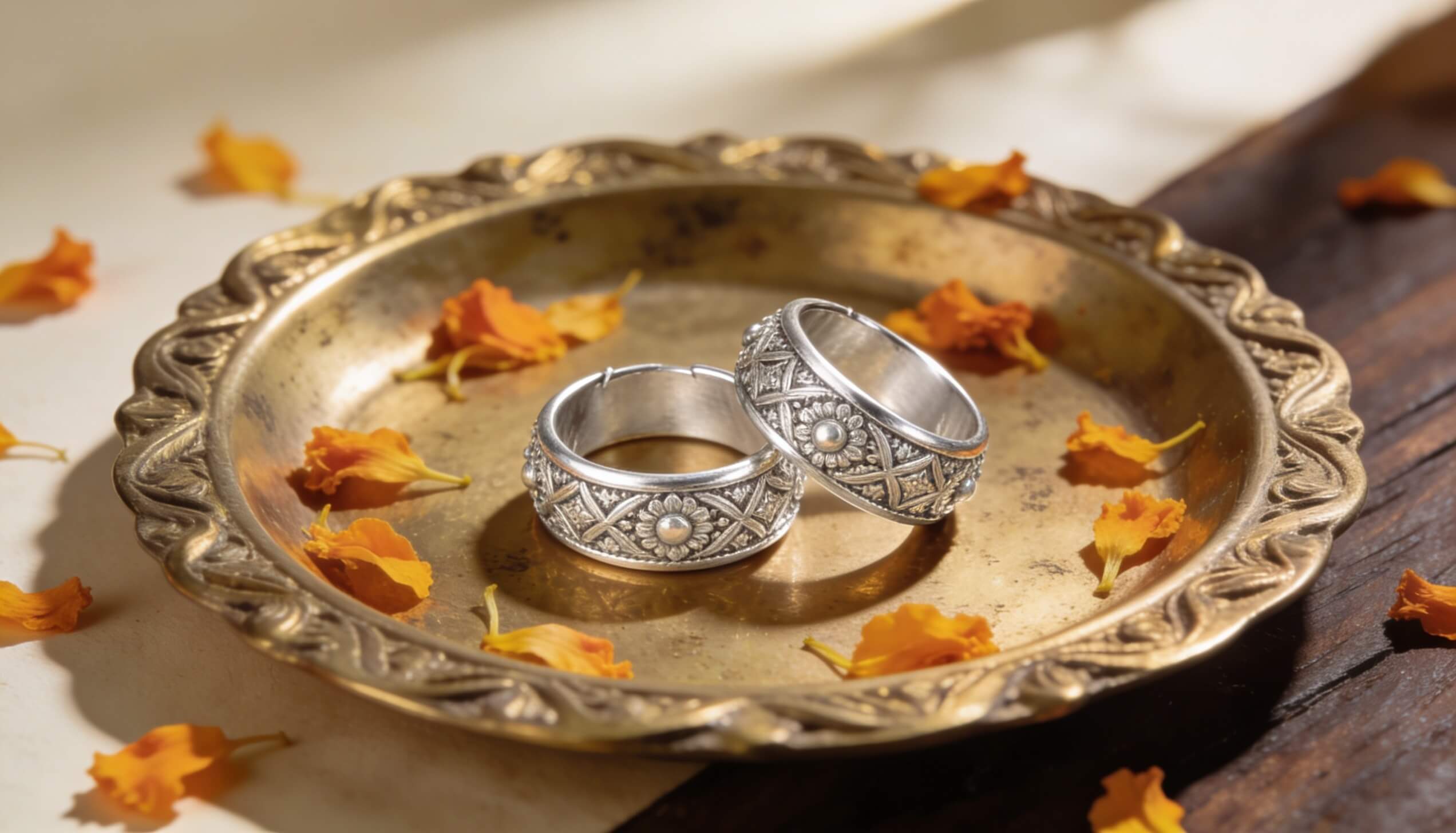
Toe rings, known as Bichiya in Hindi and Mettelu in Telugu, are traditionally worn by married Hindu women in India. They hold deep cultural, religious, and Ayurvedic significance — worn on the second toe of both feet, they are believed to regulate reproductive health, mark marital status, and connect the wearer to ancient traditions of femininity and auspiciousness.
History and Origins: A Timeline
Indus Valley Civilisation
The tradition of wearing toe rings in India dates back thousands of years. References to Bichiya appear in ancient Sanskrit texts, and toe rings have been found among archaeological discoveries from the Indus Valley civilisation — one of the oldest urban cultures in human history.
The Ramayana
In the Ramayana, Sita is described as removing her Bichiya and dropping them from the sky as a marker for Lord Ram — a moment that underlines just how significant the toe ring was considered, even in mythology.
Marriage Ritual
In most Hindu traditions, the Bichiya is specifically a symbol of marriage. When a woman is married, toe rings are placed on her second toes during the wedding ceremony — a ritual as significant as the exchange of garlands or the tying of the Mangalsutra.
Solah Shringar
In South Indian traditions — particularly among Telugu, Tamil, and Kannada communities — the Mettelu is one of the sixteen Solah Shringar (adornments) a woman receives at marriage. It is not merely decorative. It is a declaration.
Cultural Significance: The Mark of a Married Woman
Widows in many traditional communities remove their toe rings as part of mourning rituals — underscoring just how deeply the Bichiya is tied to the status and life of the woman who wears it.
Why Silver — and Only Silver?
Across all Indian regional traditions, toe rings are made exclusively from silver. Gold is never used. This is not arbitrary.
Ayurvedic tradition holds that gold, which is considered a conductor of heat, is inappropriate below the waist. Silver, on the other hand, is believed to be a good conductor of the body’s natural energy — absorbing it from the earth and channelling it through the body.
There is also a physiological dimension. The second toe has a nerve that connects to the uterus and passes through the heart. Silver toe rings, worn consistently, are believed in Ayurvedic medicine to regulate the menstrual cycle and support reproductive health by applying gentle, consistent pressure on this nerve — a form of acupressure recognised long before modern medicine acknowledged it.
Which Toe — and Why?
Toe rings are always worn on the second toe of both feet — never the first (big toe) or the third. This is consistent across regional traditions and has its roots in the Ayurvedic nerve-mapping described above. The second toe is considered the most auspicious and energetically significant position.
Regional Variations Across India
| Region | Local Name | Typical Design |
|---|---|---|
| Andhra Pradesh & Telangana | Mettelu | Typically plain silver bands, worn in pairs, sometimes with delicate texturing or stone settings |
| Tamil Nadu | Metti | Similar design, sometimes more ornate with filigree work |
| Maharashtra | Bichiya | Often heavier silver rings, sometimes with bells or floral motifs |
| North India | Bichiya | Designs tend to be more ornate, with floral and peacock motifs common |
| Rajasthan | Bichiya | Some of the most intricate Bichiya designs in India — carved, embossed, and set with stones |
Modern Interpretations: Tradition Meets Contemporary Taste
The Bichiya has evolved. Younger Indian women today choose from a much wider range of toe ring designs — adjustable open bands, minimal plain rings, stone-set styles, and contemporary geometric designs — while maintaining the tradition of wearing them on the second toe.
Many women who are not following the marriage tradition also wear toe rings today as a personal style choice — drawn to their cultural depth and the quiet elegance of a piece that is seen only when you look for it.
Frequently Asked Questions
Can unmarried women wear toe rings in India?
Traditionally, Bichiya are worn by married women. However, in contemporary India, many unmarried women wear toe rings as a style choice, particularly on a single toe or in non-traditional designs. Context and community norms vary.
Why can’t gold be used for toe rings?
Ayurvedic tradition considers gold inappropriate for use below the waist. Silver is specifically chosen for its believed ability to conduct body energy and its cooling, grounding properties.
Do toe rings have any health benefits?
Ayurvedic medicine associates silver toe rings worn on the second toe with reproductive health benefits, attributing this to the nerve that runs from the second toe through the uterus. While this is traditional belief rather than clinical medicine, it has been part of Indian wellness tradition for centuries.
Where can I buy authentic silver toe rings online?
Ksheeras — backed by Jetty Jewellery, Rajahmundry’s trusted jeweller since 1940 — offers a curated collection of 925 silver toe rings in traditional and contemporary designs, delivered pan-India.
Explore our silver Mettelu collection — traditional designs and contemporary styles, crafted with 85 years of jewellery expertise behind every piece.
